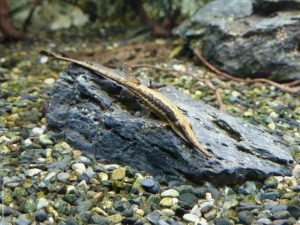
Farlowella – Twig Catfish is a type of Plecostomus.
Description:
The term Farlowella refers to a group of fish rather than one particular species. It is a genus in the Loricariidae family that contains the Twig Catfish.
The genus is native to South America, more specifically in the Amazon, Orinoco, and Paraná rivers. Here they live in flooded areas with plenty of vegetation and tree roots/branches.

The lifespan of these fish can vary considerably. Some can live for 15 years or more, whereas others don’t make it past 5 years old. Be prepared to care for these fish for a long time, but don’t be surprised if you lose them sooner than expected.
Twig Catfish are rarely kept fish, so they are not often stocked in pet shops. It will depend on the size of your local store. Have a look around online to find a stock that is close to you. A single fish shouldn’t cost too much, expect to pay between R70 and R160.
Farlowella acus is the name most often attached to the fish in shops or books and this is unlikely its true identity. Experts think the true F. acus has probably never knowingly been imported for the trade and the species is threatened with extinction.
Most commonly sold seems to be F. vittata, with occasional specimens of F. mariaelenae, which live beside them in the wild. While F. vittata has been bred successfully in the aquarium, fish in shops will be wild-caught, so, when buying, follow the same advice as with all plecos.
Behaviour:
These fish are generally peaceful, but they are also timid. This is why they are best suited to a species tank since they can easily be outcompeted for food by tank mates.
Though they don’t necessarily shoal, these species enjoy being around their own kind and can be kept in large groups.
The only time that they may show aggression is while mating, at which point males sometimes become territorial while, but they will rarely injure each other.
A community tank is a possibility, but tankmates must be slow-swimming and peaceful to ensure they don’t scare your Twig Catfish.
Virtually all their time is spent attached to surfaces using their suckermouth. They don’t move very often if they do it’s usually just a hop to a new location. In the wild, remaining motionless helps them to blend in with their environment.

Diet:
These fish are mostly vegetarian. In the wild, they would rasp algae from the surfaces they perch on and scavenge any other plant matter that they come across.
Some people seem to think that you do not need to provide food for algae eaters because they eat the algae in the tank, but this is wrong.cYou must provide food to ensure that they have something to eat and to give them a varied, nutritional diet.
Algae wafers are the most commonly used. They can be found in most stores and will be happily accepted by your fish.
These can be supplemented with green vegetables from your kitchen. Try cutting up small pieces of zucchini, spinach, or lettuce.
You can add small amounts of meaty foods into a Twig Catfish’s diet, such as sinking frozen foods. Vegetation should always be the primary source of food though.
Feed them twice a day to ease work for their digestive system. You don’t need to give them much, there shouldn’t be lots of food sitting on the substrate throughout the day.
When you first get your fish, watch to make sure they are eating. Some might turn down meaty foods.
Observing your Twig Catfish is especially important if they have tank mates. It’s easy for Farlowella to be outcompeted for food, so make sure that they are getting some.

Compatibility:
A community aquarium is possible, but you must choose tankmates carefully.
Twig Catfish are timid, so avoid aggressive, boisterous, or even simply large fish. This rules out many species, such as most Cichlids, but there are still some options out there.
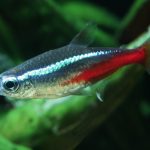
You could try some small Characins such as Neon Tetras or Flame Tetras. Similar species include Danios (e.g. Zebra or Pearl) and Devario.
Invertebrates can make some good tank mates. Most shrimp and snails will stay out of the way and won’t frighten your Farlowella.
Once you have introduced tank mates to your Twig Catfish, keep a close eye on them. Make sure that they are getting the food that they need. If other fish are stealing it all then you may need to separate them.
Planted Aquarium – Are they any good?
Yes!
Our Price ranges between – R170 to R300 depending on size and exchange rates.