

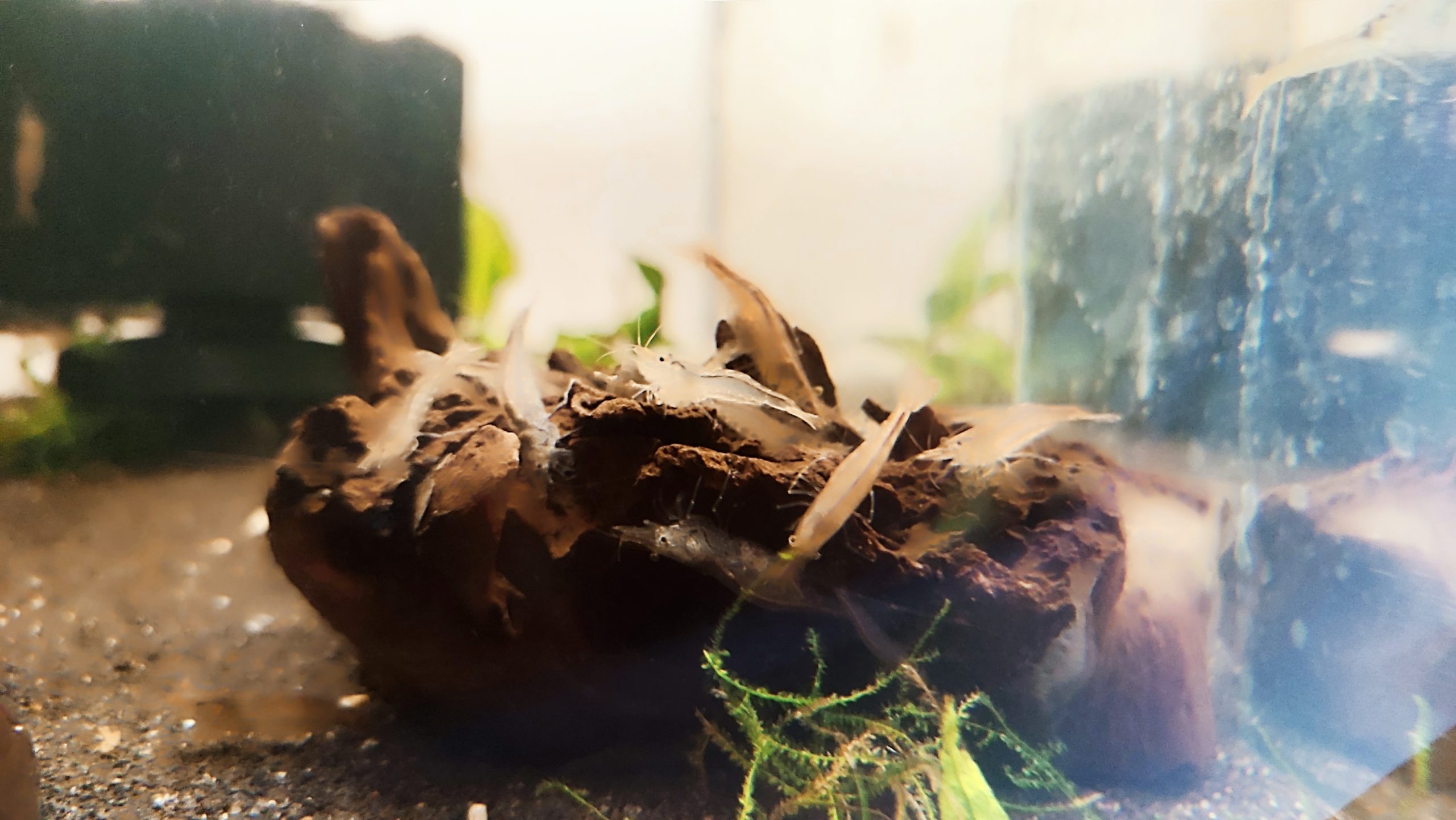
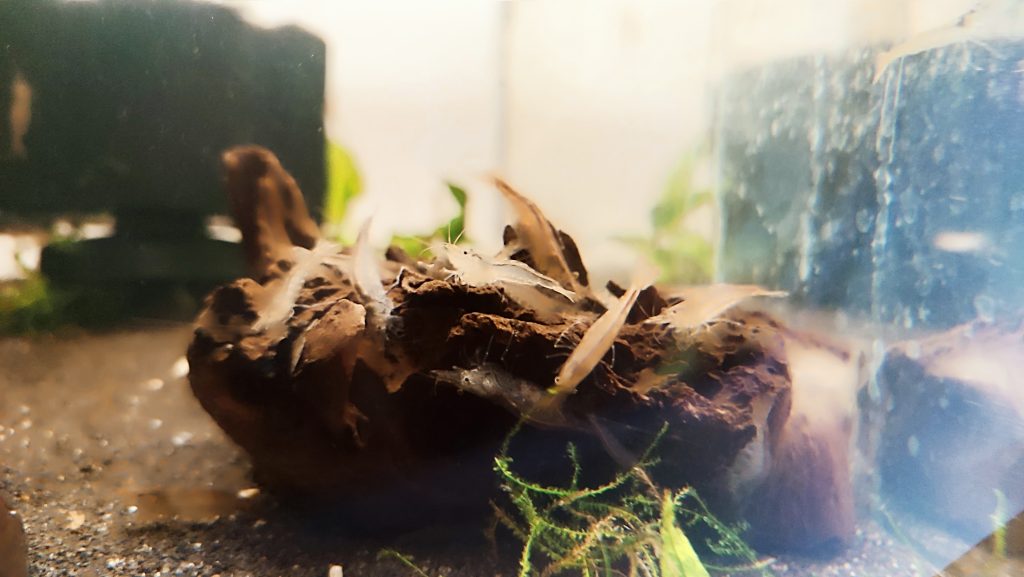
From my personal observation, Ghost Shrimp make the perfect clean-up crew for planted aquariums with docile fish and plenty of foliage to support their consistent grazing. They make sure that all uneaten food is cleaned up, they adore many types of common algae and are mesmerizing to watch.
Typical Behavior
Ghost shrimps are known for being passive and peaceful, making them the ideal tank mates for busy tanks with many other species.
These shrimps can be found swimming around the middle of the tank or cleaning leftover food and algae from the bottom. They tend to stay active and busy during the day and occasionally burrow in the sand.
While this tranquil species enjoys being in a group, a single shrimp will survive happily on its own.
Ghost Shrimp Tank & Water Requirements
Any aquarist hoping to house a ghost shrimp should ensure the shrimp’s tank is consistently warm and has a capacity of at least 25 litres.
Habitat and Tank Requirements
Ghost shrimp enjoy decorations such as driftwood, rocks, and sand. Only use rounded rocks in the tank, as sharp rocks can injure the shrimp’s exoskeleton.
Avoid nitrates accumulating in the tank. To remove nitrates from the tank’s water, introduce fast-growing floating and root-feeder plants to the tank.
Avoid plants with sensitive roots, as the shrimp’s burrowing habits may damage them.
Water Conditions
The ideal tank conditions for a ghost shrimp should be as follows:
| Water type: | Hard, freshwater |
| Tank size: | Minimum 5 gallons |
| Water temperature: | 68–82ºF |
| Acidity: | 7.0–8.0 pH |
| Water hardness: | 10–15 dGH |
| Water supplements: | Calcium |
The tank conditions for a ghost shrimp should mimic the shrimp’s natural habitat — warm freshwater, with a layer of sand at the bottom and a range of plants to enjoy.
Ghost shrimp don’t require excessive filtration — purchasing a filter to match the size of your tank is sufficient, and a sponge filter is ideal. The shrimp enjoy swimming in the bubbles created by an air pump.
Avoid creating a current that’s too strong, inhibiting your shrimp’s ability to swim.
 Ghost Shrimp Diet & Feeding
Ghost shrimp will spend much of their day grazing on the algae and biofilm that grows in the tank.
You’ll see them constantly walking around, sifting through the substrate.
It’s a clever idea to use a glass feeding dish for these guys. Shrimp are messy eaters. Putting their food in a dish keeps little pieces from breaking off and sinking into the substrate.
Ghost shrimp can be snappish with each other when it comes to food. It’s better to use a larger feeding dish so less aggressive shrimp have room to eat.
What do Ghost Shrimp Eat?
Ghost shrimp are omnivores so they will eat just about anything. Some good foods include:
- Flake food
- Shrimp food pellets
- Globs of algae
- Blanched vegetables like spinach, romaine, cucumber or zucchini
- Algae wafers
- Blood worms
- Leaves (Indian almond leaves are a favorite)
- Spirulina
How Often Should I Feed Ghost Shrimp
Because ghost shrimp constantly graze on stuff in the tank, you don’t actually have to feed them a whole lot.
If you have fish in the tank, they’ll happily eat any flake food that sinks to the bottom.
If you have a large colony of ghost shrimp, feeding every day is OK. Just make sure that the shrimp eat it all within 4 hours and remove uneaten food.
If they’re leaving a lot of food, give them less at a time. Or you can switch to feeding every other day.
If you only have a few shrimp, you probably only need to feed them four times a week. Especially in a heavily planted tank where they can graze all day.
You should always see the shrimp actively go after food within 10 minutes or so of it being dropped in the tank.
If they’re not immediately going for it, they’re not hungry. Remove the food and give them a day or two to get hungry.
Ghost Shrimp as Feeder Fish
Ghost shrimp do make a tasty treat for large fish, like Oscars or Jack Dempseys.
But there’s a catch.
They’re not that nutritious. Most ghost shrimp are wild caught and just not treated very well.
Feeder fish are only as nutritious as the diet they’ve been eating. So if they’ve been jostled around from place to place and fed a crummy diet, they’re not that great of a food source. My note – therefore we will not sell them as feeder fish. They are far too precious to beautiful, and they keep many issues under control for the planted aquarium enthusiast.
- Credit – https://modestfish.com/ghost-shrimp/
General Care
Caring for ghost shrimp is straightforward because of their lack of stringent feeding needs, relatively small tank size requirement, and peaceful nature.
Supplement your ghost shrimp’s food and water with calcium to keep their shell strong. Bright lights and access to hiding places within the tank will keep this species entertained.
Common Problems
Ghost shrimp react negatively to improper water conditions, such as pH outside of the 7–8 range, or the presence of ammonia in the tank. The shrimp are also particularly susceptible to the vorticella parasite and several bacterial infections.
Vorticella is a parasite that appears as a white fungus on the ghost shrimp’s tail and the tip of their nose. This parasite may cause a loss of appetite and energy in ghost shrimp and can be treated with aquarium salt and a good filter.
Bacterial infections will appear as a pink, swollen spot on a ghost shrimp’s body. Unfortunately, bacterial infections are usually fatal for ghost shrimp, so the best course of action is to separate the infected shrimp from their tank mates to stop the infection from spreading.
Is a Ghost Shrimp Dangerous?
Ghost shrimps are not considered dangerous. However, aquarists should avoid keeping too many of these shrimps in a tank together, because the species can become aggressive and attack its tank mates when it must fight for space.
Tank Mates
Ghost shrimp make ideal tank mates for small, calm, bottom-dwelling fish, due to both species’ shy and non-aggressive natures.
These tiny crustaceans’ size makes them vulnerable to being eaten, so avoid pairing them with large predators.
Our final word – if you desire to do less maintenance in your aquascapes aquarium and enjoy beautiful sepcimens of a creature known to have existed for millions of years now, from the Jurassic Period, then Ghost Shrimps are the ideal planted aquarium companion.

