

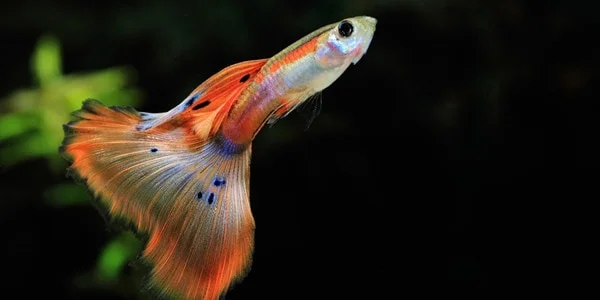
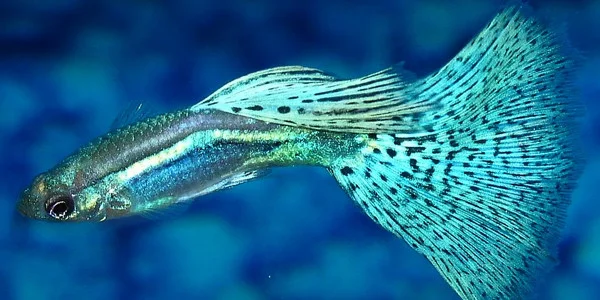
The Guppy (Poecilia reticulata) is one of the most popular freshwater fish species and there are plenty of reasons for their popularity.
They are colorful, lively, extremely fun to watch, and are adaptable to an immense variety of conditions.
However, one thing that certainly sets them apart as a species is the fact that they are much easier to keep than most other species.
But this feat should not be abused considering there are many things you can do to help your guppies reach their full potential and thrive in your aquarium.
Here are some key factors to consider when it comes to taking exceptional care of your guppies.
Aquarium Size Suitable for Guppies
 Guppies are exceedingly small fish whose bio-load is also very small, so they don’t really need much space to live normally.
However, they still need a reasonable amount of space, and you will have to make sure that your tank is big enough for them to thrive.
When it comes to guppies, you can follow the general rule based on an estimate that one gallon of water is enough to support one inch of fish.
Experienced experts recommend your guppies should always be held as trios if there are both male and female guppies in the tank.
Starting from these three, they should be provided with 4 gallons of water and for any additional guppies, you should stick to the 1:1 ratio rule, which is at least one gallon of water per guppy.
For instance:
- 20 litres of water for 3 guppies
- 40 litres of water for 6 guppies
- 60 litres of water for 9 guppies and so on.
The Best Male to Female Ratio
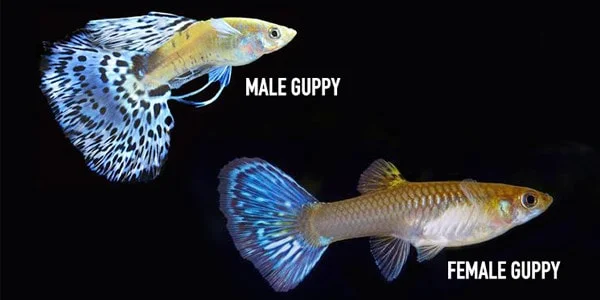 If you don’t feel like breeding your guppies or having both sexes in your aquarium, you should definitely think about keeping males only.
Males are more colorful than females as well, so you will not miss out on keeping males only.
On the contrary, if you choose to keep both sexes of guppies, there are some guidelines on how to decide which ratio is the best.
Experts recommend at least a 1:2 male to female ratio for guppies because male guppies tend to harass females and chase them around too much if alone.
If you decide to adhere to this rule, the best way to do this is to keep your guppies in threes.
For example:
- 1 male and 2 or more females
- 2 males and 4 or more females
- 3 males and 6 or more females and so on.
Water Temperature
Guppies are known for their hardiness and great ability to adjust to different environments, but if you really want your guppies to feel comfortable, there are some general recommendations for making your aquarium the best place for their exact needs.
The easiest way to do this is to mimic the atmosphere from their natural habitat in the waters of the Amazon River or rivers and lakes all across South America.
The ideal water temperature for guppies is anywhere between 10⁰- 29⁰Celsius (50⁰F – 84⁰F).
One thing particularly important is consistency; too much fluctuation in temperature can cause significant health issues, specifically if the temperature drops suddenly and drastically.
Water Parameters and Changing Water
 Water hardness and pH levels are both especially important.
The pH levels range from 1 to 14, with pH values between 1 and 7 considered acidic and pH of 7 means the water is neutral; everything above 7 signifies the water is basic (alkaline).
Guppies prefer close-to-normal pH levels.
The ideal pH level for a guppy ranges from 6.8 to 7.8, the value found in their natural habitat.
The ideal water hardness for guppies is dGH 8-12.
The correlation between water hardness and pH is particularly important.
Usually, the higher the water hardness, the higher the pH level is.
The general rule for most species is to change half of your water every week so it always remains fresh and clean.
You can do this in many ways; some people recommend changing 10% of your water every day in order to keep your water in pristine condition.
If you do not have enough time for this technique, then you should change around 30% of your water every five days.
Many experts consider changing the water weekly (every 7 days) as suboptimal.
Feeding Guppies
Perhaps the most important thing when keeping guppies is feeding.
There are so many factors you need to take into consideration in deciding how to feed them properly.
The best foundation for your guppies’ diet is guppy flakes.
You should always pay attention to how diverse the food is you are giving them.
Always supplement fish flakes with other types of food for a varied diet.
Pellet fish food can also be used; however, you should ensure the pellets are small enough for their mouth.
The best choices are the special smaller pellets, designed for smaller fish such as guppies.
Guppies can also enjoy live or freeze-dried food in their diet.
Popular live or freeze-dried foods suitable for guppies include brine shrimp, daphnia, mosquito larvae, and bloodworms.
Additionally, guppies are partial to vegetables such as lettuce, peas, and cucumbers.
Feed your guppies only one or two times a day in lesser amounts at a time.
Never add more than your fish can eat.
The most important thing when feeding your guppies is to NOT overfeed them.

